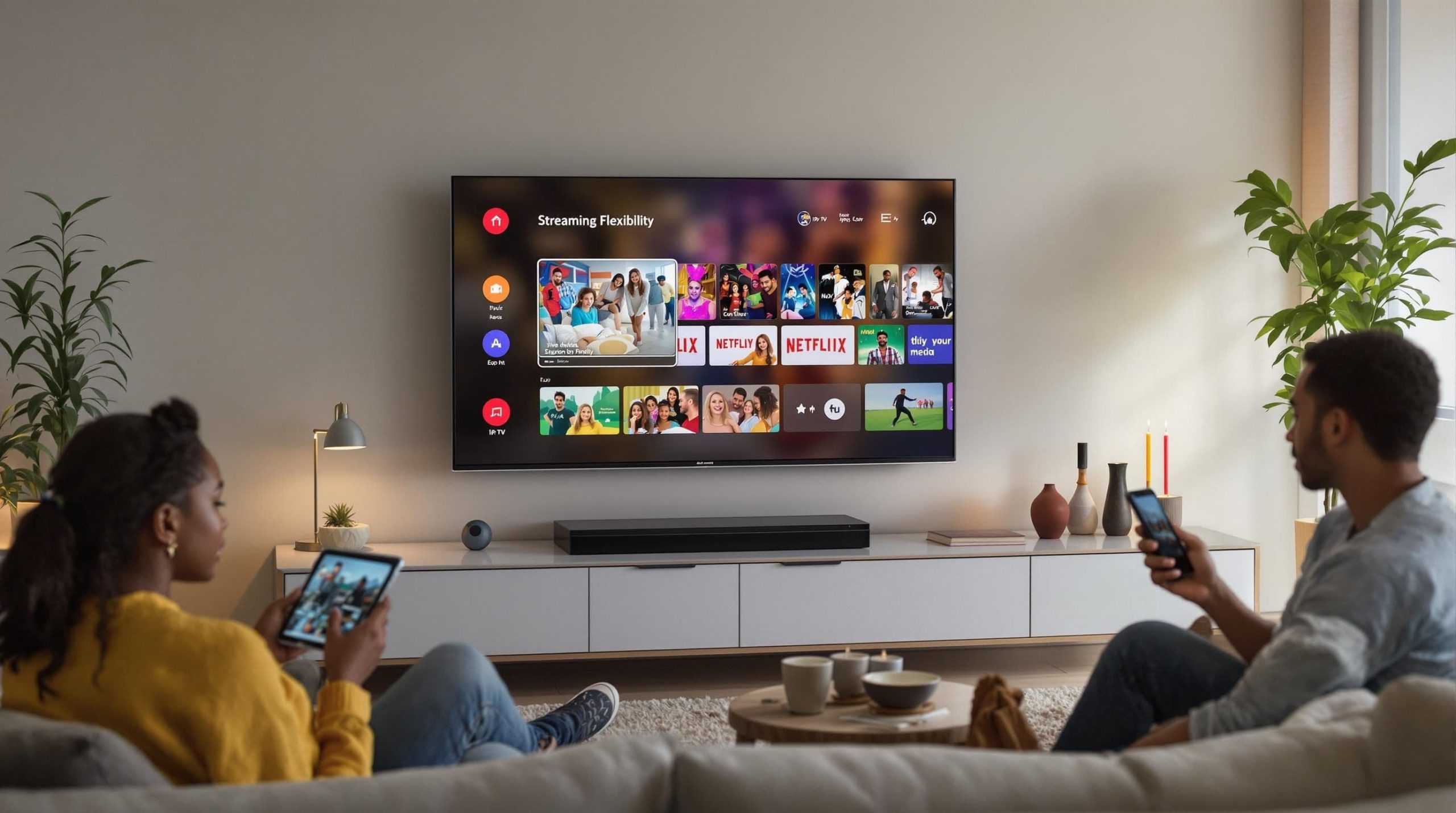
IPTV and satellite TV are in a fierce competition for the top spot in home entertainment. Streaming isn’t just about more channels or bigger screens anymore. But here’s the surprise. Nearly 57% of American households still use cable or satellite while IPTV is rapidly claiming market share with lower costs and better tech. Most people assume satellite has the upper hand in quality and reliability. In reality, IPTV’s streaming flexibility and future-ready features are already outpacing the old system and changing how families will watch TV in 2025.
Table of Contents
- Streaming Quality And 4K Content Compared
- Cost, Accessibility, And Setup Requirements
- Multi-User Experience And Household Needs
- Which Option Is Best For Tech-Savvy Viewers?
Quick Summary
| Takeaway | Explanation |
|---|---|
| IPTV offers superior streaming quality | IPTV outperforms satellite TV with better high-definition streaming and dynamic quality adjustments based on network conditions. |
| Lower installation and maintenance costs for IPTV | IPTV requires minimal setup and equipment, benefiting consumers with lower initial costs compared to satellite TV’s complex infrastructure. |
| IPTV supports multiple users seamlessly | Families benefit from IPTV’s capabilities, allowing simultaneous streaming on various devices without sacrificing quality or requiring extra subscriptions. |
| Flexibility in subscription options | IPTV provides customizable monthly plans without long-term contracts, enhancing affordability and catering to individual user preferences. |
| Advanced features appeal to tech-savvy viewers | IPTV integrates with smart home technologies, supports personalized recommendations, and adapts to emerging tech, making it ideal for modern consumers. |
Streaming Quality and 4K Content Compared
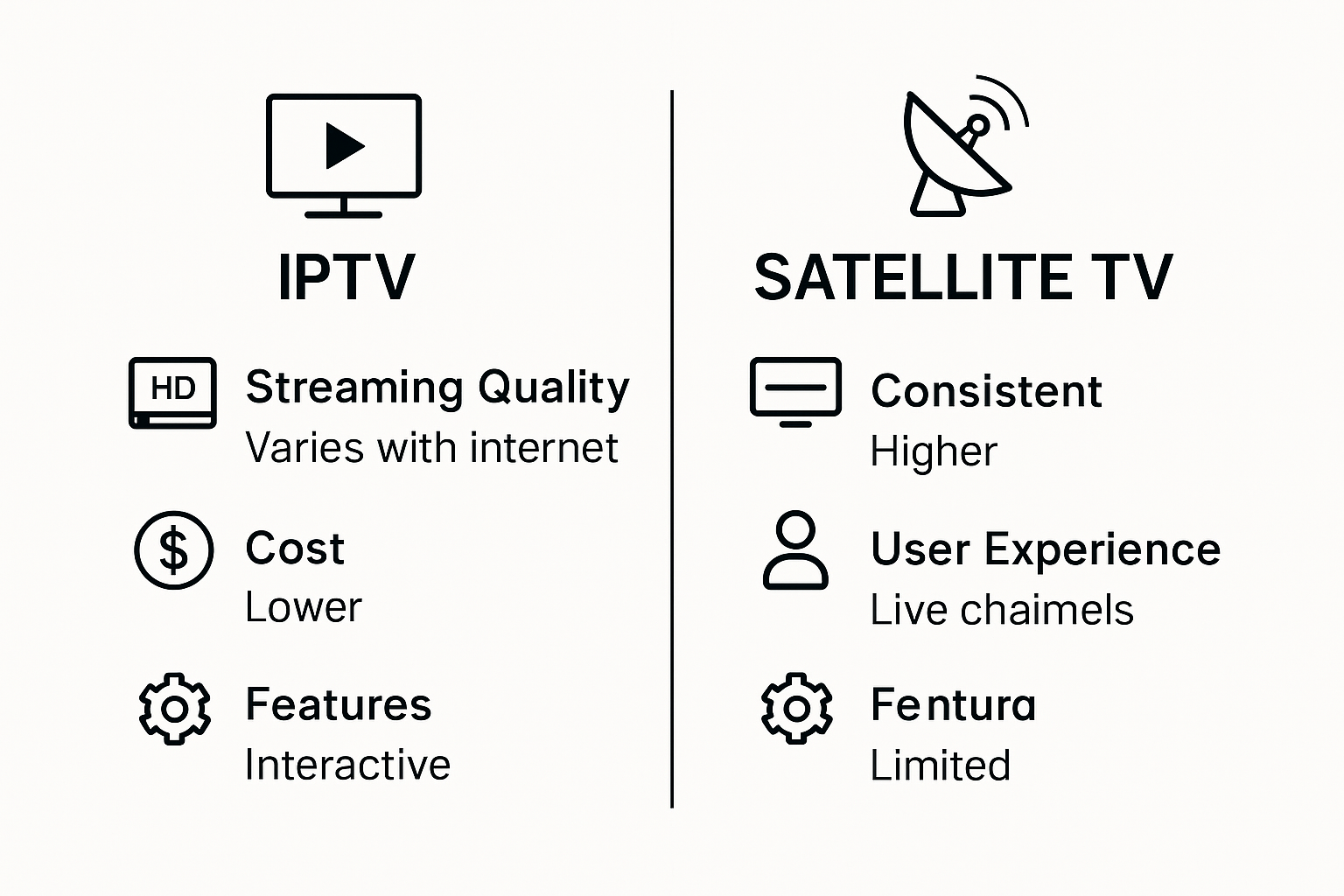
The following table summarizes the key performance differences between IPTV and satellite TV in terms of streaming quality, 4K capabilities, and reliability as discussed in this section.
| Feature | IPTV | Satellite TV |
|---|---|---|
| HD Streaming Quality | Adaptive, optimized by algorithms, consistent | Generally high, but fixed; affected by weather |
| 4K/Ultra HD Content Delivery | Efficient, smoother 4K with less buffering | Limited by bandwidth, often compressed |
| Reliability | Less impacted by weather, internet-dependent | Vulnerable to weather disruptions |
| Technology Adaptation | Rapid evolution (AI, ML for streaming enhancement) | Slower to evolve, limited by hardware |
| Future-Ready (8K, advanced tech) | Yes, dynamic upgrades via software | Limited adaptability |
The battle between IPTV and satellite TV reaches its pinnacle when examining streaming quality and 4K content delivery. Modern viewers demand crystal clear images, seamless streaming, and immersive entertainment experiences that push technological boundaries.
High Definition Performance Metrics
IPTV technology demonstrates remarkable advantages in delivering high definition content compared to traditional satellite transmission. Neural network research reveals that IPTV services can dynamically adjust video quality based on network conditions, ensuring consistent streaming performance. Unlike satellite TV, which relies on physical infrastructure and weather dependencies, IPTV leverages internet protocols to provide more reliable and adaptive streaming experiences.
The quality assessment models developed by researchers show that IPTV can maintain superior video quality across various network environments. These advanced systems use sophisticated algorithms to predict and optimize streaming performance in real time, giving IPTV a significant technological edge over satellite transmissions.
4K and Ultra HD Content Delivery
When comparing 4K content delivery, IPTV emerges as the clear frontrunner. Advanced streaming quality studies highlight IPTV’s managed network infrastructure as a critical advantage for delivering ultra high definition content. The internet protocol technology allows for more efficient bandwidth utilization, enabling smoother 4K streaming with minimal buffering and picture degradation.
Satellite TV providers struggle to match IPTV’s 4K capabilities due to significant technical limitations. Signal transmission through satellite requires substantial bandwidth, which often results in compressed video signals and reduced image quality. IPTV, by contrast, can dynamically adjust streaming parameters to maintain pristine 4K resolution across different internet connection speeds.
Future of High Quality Streaming
The trajectory of streaming technology points decisively toward internet protocol based solutions. Predictive quality assessment research suggests that IPTV will continue evolving, incorporating machine learning and artificial intelligence to further enhance streaming experiences. These technological innovations promise even more sophisticated methods of maintaining video quality, reducing latency, and providing viewers with unparalleled entertainment experiences.
As 4K and eventually 8K content becomes standard, IPTV stands prepared to meet increasing consumer demands for high definition streaming. The flexibility of internet protocol networks allows for continuous improvement and adaptation, positioning IPTV as the superior choice for discerning viewers seeking top tier visual experiences in 2025 and beyond. Learn more about our premium streaming solutions.
Cost, Accessibility, and Setup Requirements
To help clarify the differences in setup, cost, and accessibility between IPTV and satellite TV, here is a table summarizing equipment, installation, and ongoing requirements based on details in this section.
| Aspect | IPTV | Satellite TV |
|---|---|---|
| Installation | Plug-and-play, uses existing internet connection | Requires dish, mounting, professional install |
| Equipment | Smart TV, streaming device, or set-top box | Satellite dish, receiver, cables |
| Upfront Cost | Low (minimal hardware) | Higher (hardware, possible structural changes) |
| Maintenance | Simple, done via software updates | Requires hardware servicing, potential extra fees |
| Contracts/Subscriptions | Month-to-month, customizable | Usually multi-year contracts, less flexibility |
| Accessibility Features | Supports voice, screen readers, customization | Limited, depends on provider and hardware |
Navigating the landscape of television services requires a comprehensive understanding of cost, accessibility, and technical setup requirements. Modern viewers seek solutions that balance affordability, ease of installation, and comprehensive entertainment options.
Installation and Equipment Costs
IPTV presents a significantly more flexible and cost effective approach compared to traditional satellite TV. Comprehensive IPTV research reveals that internet protocol television services eliminate the need for extensive physical infrastructure, reducing both initial setup expenses and ongoing maintenance costs. Unlike satellite TV, which demands specialized satellite dishes, mounting equipment, and professional installation, IPTV operates through existing internet connections.
The equipment requirements for IPTV are remarkably straightforward. Users typically need only a compatible smart TV, streaming device, or set top box with internet connectivity. This dramatically reduces upfront investment and simplifies the technical setup process. Satellite TV, by contrast, requires professional installation, often involving complex mounting procedures and potential structural modifications to homes.
Accessibility and Technological Inclusivity
Accessibility remains a critical consideration in modern entertainment services. The FCC mandates that television services provide accessible controls and on screen menus, ensuring individuals with visual impairments can navigate programming effectively. IPTV excels in this domain, offering advanced accessibility features through internet connected devices that support screen readers, voice controls, and customizable interface options.
Statistically, households are diversifying their entertainment choices. Government research indicates that approximately 57% of American households subscribe to cable services, while 19% utilize direct broadcast satellite services. IPTV is rapidly emerging as a third alternative, attracting consumers with its flexibility, lower costs, and comprehensive technological integration.
Long Term Cost Effectiveness
The economic advantage of IPTV becomes increasingly apparent when examining long term expenses. Traditional satellite and cable services often lock consumers into multi year contracts with escalating prices. IPTV subscriptions typically offer more transparent pricing models, with month to month options and the ability to customize channel packages according to individual preferences.
Moreover, IPTV eliminates additional fees associated with satellite services such as equipment rental, installation charges, and maintenance contracts. The internet based nature of IPTV means updates and feature improvements can be implemented seamlessly through software upgrades, without requiring physical equipment replacements.
As technology continues evolving, IPTV represents a forward thinking solution for budget conscious consumers seeking comprehensive entertainment access. Explore our flexible streaming plans to discover how modern television services can transform your viewing experience while maintaining economic efficiency.
Multi-User Experience and Household Needs
Modern households want entertainment that adapts to different users and devices. The following table highlights how IPTV and satellite TV compare in supporting multi-user experiences and personalized viewing, as described in this section.
| Feature/Need | IPTV | Satellite TV |
|---|---|---|
| Simultaneous Streams | Multiple devices/screens per household | Usually only one, or costly upgrades needed |
| User Profiles | Yes, supports custom recommendations and histories | Generally unavailable |
| Device Compatibility | Smart TVs, tablets, smartphones, computers | TV with satellite receiver only |
| Multi-location Access | Supported (multiple connections per plan possible) | Restricted to installed location |
| Cost for Multi-user Use | Usually included in base subscription | Often higher, requires extra subscriptions |
| Pausing/Resuming Across Devices | Yes, seamless across registered devices | Rarely available |
Modern households demand flexible entertainment solutions that cater to diverse viewing preferences, multiple device usage, and simultaneous content consumption. The evolution of streaming technology has transformed how families interact with media, making multi user experience a critical factor in choosing between IPTV and satellite TV.
Personalized Viewing and Device Compatibility
Advanced IPTV research reveals the technology’s exceptional ability to support multi screen and personalized viewing experiences. Unlike traditional satellite TV, which often limits simultaneous viewing to a single screen, IPTV enables household members to watch different content on various devices simultaneously. Parents can stream news in the living room while children enjoy cartoons on tablets, all through the same internet connection.
The flexibility extends beyond simple screen sharing. IPTV platforms offer sophisticated user profiles, allowing each family member to have personalized recommendations, watch lists, and viewing histories. This level of customization ensures that every household member receives a tailored entertainment experience, a feature largely unavailable in satellite TV systems.
Bandwidth and Streaming Performance
Wireless streaming studies highlight the critical importance of managing inter user delay and video quality when multiple users access content simultaneously. IPTV’s internet protocol infrastructure allows for dynamic bandwidth allocation, ensuring that streaming quality remains consistent even when multiple devices are in use. This means a 4K movie stream in one room will not significantly degrade the HD gaming stream in another.
Satellite TV encounters significant challenges in managing multi user experiences. The fixed bandwidth and signal transmission limitations mean that simultaneous viewing can result in reduced picture quality or interrupted streams. IPTV, by contrast, can intelligently manage network resources, providing a smoother and more reliable viewing experience for all household members.
Flexible Subscription and Connection Options
The modern family requires flexibility in both content and connectivity. IPTV services recognize this need by offering multi connection plans that allow simultaneous streaming across different devices and locations. A single subscription can support 3 to 4 concurrent connections, enabling family members to enjoy content on smartphones, smart TVs, tablets, and computers without additional costs.
Traditional satellite TV packages often require separate subscriptions or expensive upgrades to support multiple viewing points. IPTV eliminates these constraints, providing a more cost effective and user friendly approach to household entertainment. The ability to pause, rewind, and resume content across different devices further enhances the multi user experience.
As households become more technologically diverse and connected, IPTV stands out as the superior solution for meeting complex entertainment needs. Discover our flexible family streaming options that transform how your household experiences media in 2025 and beyond.
Which Option Is Best for Tech-Savvy Viewers?
Tech-savvy viewers demand cutting-edge entertainment solutions that offer seamless integration, advanced features, and unparalleled customization. The landscape of streaming technology is rapidly evolving, with IPTV emerging as the clear frontrunner for technologically sophisticated consumers.
Advanced Technological Integration
Comprehensive IPTV research demonstrates the technology’s exceptional capabilities in delivering interactive and flexible entertainment experiences. Unlike traditional satellite TV, IPTV provides deep technological integration that appeals to users who appreciate sophisticated streaming solutions. The platform supports advanced features like real-time data overlays, interactive programming, and seamless cross device synchronization.
Tech enthusiasts appreciate IPTV’s ability to integrate with smart home ecosystems, voice assistants, and advanced network configurations. The internet protocol foundation allows for continuous software updates, ensuring that the platform remains at the forefront of technological innovation. Satellite TV, by contrast, remains relatively static, with hardware limitations restricting its ability to adapt quickly to emerging technological trends.
Customization and Technical Flexibility
Market growth analysis reveals that IPTV operators are aggressively expanding their service offerings, particularly in HD, multiscreen, and hybrid services. This approach directly addresses the needs of tech-savvy viewers who desire granular control over their entertainment experience. IPTV platforms allow users to create custom channel packages, develop personalized viewing profiles, and integrate multiple content sources seamlessly.
Recent Posts
- IPTV vs Satellite TV: Which Is Best for 2025 Streaming?
- How to Update IPTV App Easily for Better Streaming 2025
- What Is M3U Playlist? Streaming Benefits for 2025
- IPTV Download 2025: Stream 4K TV Easily at Home
- Best IPTV TV Services 2025: 4K Streaming and Top Features
- IPTV Parental Controls: Secure Family Streaming in 2025
- How to Set Up IPTV on Smart TV Philips for Ultra HD Streaming 2025
The technical flexibility extends beyond content selection. Advanced users can configure network settings, optimize streaming parameters, and even implement custom scripts or integrations that enhance their viewing experience. Satellite TV remains constrained by rigid hardware and limited customization options, making it increasingly less attractive to technologically sophisticated consumers.
Future-Proof Entertainment Solutions
Tech-savvy viewers are not just consuming content they are anticipating future technological innovations. IPTV represents a forward thinking solution that continuously adapts to emerging technologies. The platform supports emerging standards like 4K and 8K streaming, artificial intelligence driven content recommendations, and advanced interactive features that transform passive viewing into an engaging, personalized experience.
The inherent adaptability of internet protocol technology means that IPTV can rapidly incorporate new technologies such as augmented reality interfaces, machine learning content curation, and advanced network optimization techniques. Satellite TV, with its reliance on traditional broadcast infrastructure, cannot match this level of technological responsiveness.
For viewers who demand more than simple content consumption, IPTV offers a glimpse into the future of entertainment. Explore our advanced streaming technology and discover how modern streaming can transform your viewing experience. The choice for tech-savvy viewers is clear: IPTV represents the pinnacle of technological innovation in home entertainment.
Frequently Asked Questions
What is the main difference between IPTV and satellite TV?
IPTV uses internet protocols for streaming content, offering more flexibility and lower costs, while satellite TV relies on satellite signals, often resulting in higher installation and maintenance expenses.
Does IPTV provide better picture quality compared to satellite TV?
Yes, IPTV typically offers superior streaming quality with adaptive algorithms that optimize video quality, while satellite TV can be affected by weather conditions and has limitations in bandwidth.
Is IPTV more cost-effective than satellite TV?
IPTV generally has lower installation costs and more flexible subscription plans, allowing consumers to choose month-to-month options without long-term contracts, making it more economical in the long run.
Can multiple users stream on IPTV simultaneously?
Absolutely! IPTV allows multiple devices to stream simultaneously without compromising quality, making it ideal for families with different viewing preferences.
Make 2025 the Year You Upgrade Streaming For Good
Are you tired of limited channels, high setup costs, and unreliable quality from traditional satellite TV? As highlighted in this article, the shift toward IPTV is not just about technology. It’s about freedom, flexibility, and getting the best streaming quality without extra hassle. Problems like unpredictable weather interruptions, expensive contracts, and limited device compatibility can easily ruin your family’s entertainment experience. Imagine what you could watch with over 100,000 on-demand titles and real 4K streaming, all while saving money and enjoying a true multi-user solution that works on any device.

Make the switch to a modern streaming lifestyle today. With StaticIPTV.live, enjoy instant access to 31,000 live TV channels, HD and UHD options, and a reliable 99.99 percent uptime proven to keep your content flowing night and day. Say yes to flexible plans with up to four simultaneous connections, simple plug-and-play setup, and total device freedom, all designed for households who expect more.
Ready for a better entertainment future? Visit StaticIPTV.live right now to explore plans and start streaming with confidence. Experience why IPTV is not just a trend, but the smartest home entertainment upgrade for 2025.

Dr. Christopher J. Moore is a U.S.-based authority in IPTV and network engineering with more than 20 years of hands-on experience. He specializes in optimizing digital streaming infrastructure and offers practical, expert insights on StaticIPTV.live to help users improve performance and reliability.
Education
-
Ph.D. in Network Engineering – Moscow Institute of Physics and Technology
-
M.S. in Computer Science – Stanford University
Publications & Recognition
-
“Optimizing IPTV Streaming for Enhanced User Experience” – IEEE Transactions on Multimedia
-
Award for Excellence in Network Engineering – Russian Academy of Sciences
-
Featured contributor on IPTV innovation in Communications of the ACM
-
Keynote speaker – International Conference on Network Protocols
Dr. Moore continues to bridge complex network technology with real-world IPTV solutions, making him a trusted voice in the industry.