
Choosing the right internet speed for IPTV can make or break your streaming nights. Here is something wild. Streaming crisp 4K content needs at least 25 Mbps per device, but the average household often includes more than 10 connected gadgets competing for that speed. Most people think just upgrading your internet plan will fix buffering issues. The real secret is smarter bandwidth management and hardware tricks that double your streaming quality without paying for the highest plan.
Table of Contents
- Understanding Minimum Internet Speed For IPTV
- 4K And UHD Streaming: Advanced Speed Needs
- Multiple Devices: How To Share Bandwidth
- Tips To Optimize Your IPTV Streaming Experience
Quick Summary
| Takeaway | Explanation |
|---|---|
| Optimal Internet Speeds are Resolution Dependent | For Standard Definition (SD), 3-5 Mbps is sufficient; for High Definition (HD), 10 Mbps is needed; and for 4K Ultra HD, at least 25 Mbps is recommended for smooth streaming. |
| Network Performance Factors Matter | Total household bandwidth consumption and network quality aspects, such as connection type and router capability, are critical for a stable IPTV streaming experience. |
| Management of Multiple Devices is Essential | With multiple devices in modern households, prioritizing bandwidth through Quality of Service (QoS) settings and wired connections helps maintain quality IPTV streaming. |
| Invest in Advanced Hardware | Upgrading to dual or tri-band routers and considering wired connections can enhance network performance and improve IPTV streaming reliability. |
| Continuous Monitoring and Adaptation is Key | Regularly test internet speeds, update hardware, and analyze network performance to adapt to changing streaming demands for optimal results. |
Understanding Minimum Internet Speed for IPTV
Understanding internet speed requirements for IPTV is crucial for delivering a smooth, high-quality streaming experience. Internet speed directly impacts video quality, buffering rates, and overall viewing satisfaction. Users need to recognize how bandwidth influences their streaming performance across different content resolutions and household scenarios.
Resolution and Bandwidth Correlation
Video resolution plays a critical role in determining the necessary internet speed for IPTV streaming. According to IPTV Cable Canada, different streaming qualities demand specific bandwidth:
- Standard Definition (SD): Requires 3-5 Mbps per device, providing basic viewing experience
- High Definition (HD): Demands 10 Mbps per device for crisp, clear picture quality
- 4K Ultra HD: Needs 25 Mbps or higher to stream immersive, detailed content without interruptions
These baseline recommendations ensure viewers receive consistent streaming performance. However, real-world scenarios often involve multiple devices and simultaneous internet activities that can strain available bandwidth.
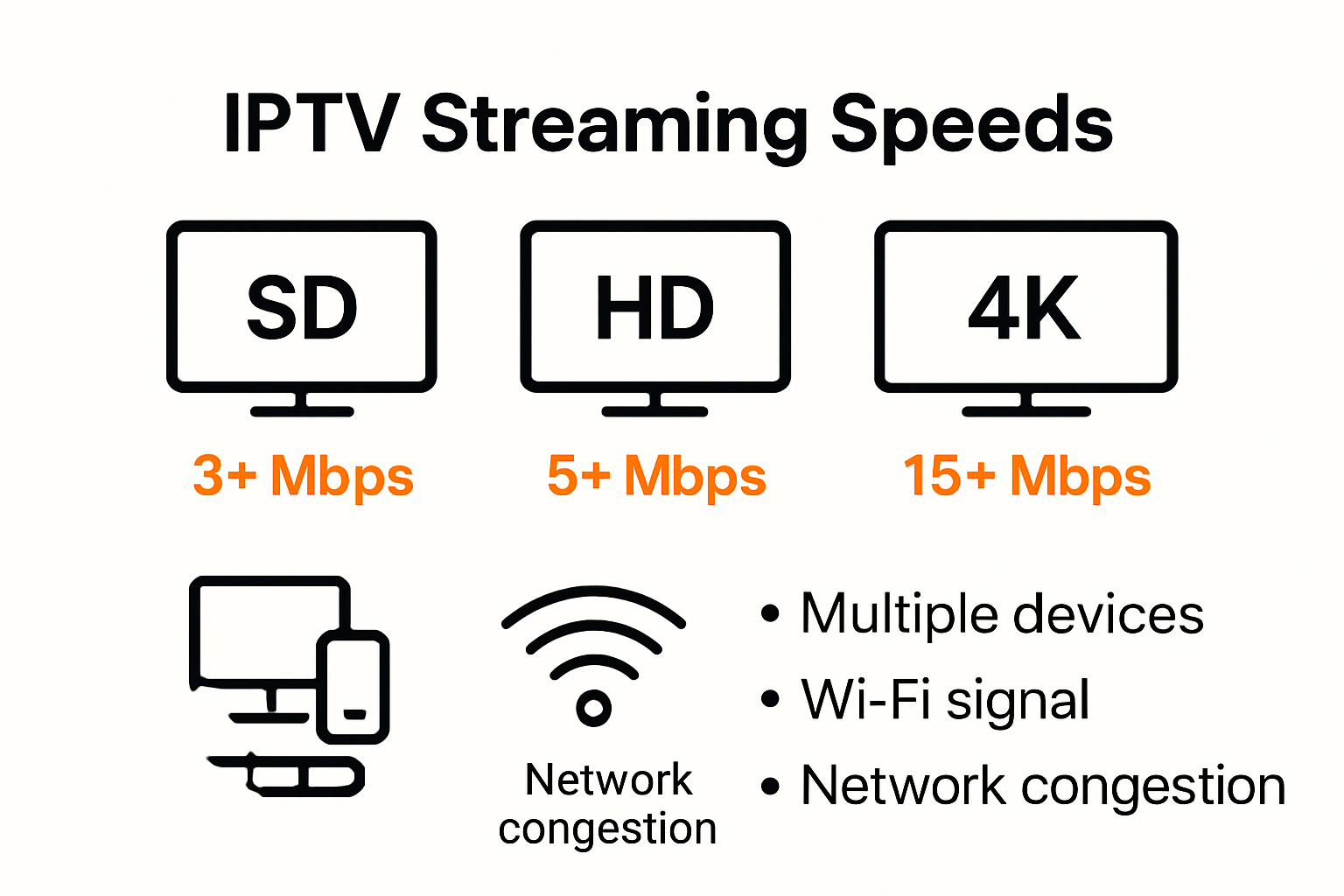
To help readers compare IPTV bandwidth requirements for each video resolution, the following table summarizes the recommended speeds per device and typical use cases.
| Video Resolution | Recommended Speed (per device) | Typical Use Case |
|---|---|---|
| Standard Definition (SD) | 3-5 Mbps | Basic viewing, older TVs |
| High Definition (HD) | 10 Mbps | Modern TVs, clear quality |
| 4K Ultra HD | 25 Mbps or higher | Immersive, detailed streaming |
Network Performance Factors
Beyond raw internet speed, several network performance factors influence IPTV streaming quality. Network Performance Experts highlight that total household internet consumption matters significantly. Concurrent activities like web browsing, online gaming, video conferencing, and file downloads can dramatically reduce available bandwidth for IPTV streaming.
Additionally, network infrastructure impacts streaming stability. Factors such as:
- Connection Type: Fiber optic and cable connections typically provide more consistent speeds compared to DSL
- Router Quality: Modern routers with advanced bandwidth management capabilities can optimize streaming performance
- Signal Interference: Wireless networks are susceptible to signal disruptions from other electronic devices
To maximize streaming performance, users should consider our comprehensive IPTV test guide for detailed diagnostics and optimization strategies.
Users seeking premium streaming experiences must look beyond basic speed metrics. A holistic approach involving network assessment, device compatibility, and strategic bandwidth allocation ensures optimal IPTV performance. While internet service providers offer varying speed packages, understanding individual streaming requirements helps consumers make informed decisions about their home network infrastructure.
Remember that internet speed recommendations continue evolving with advancing streaming technologies. Staying informed about emerging bandwidth standards and technological improvements will help viewers maintain an exceptional IPTV experience in 2025 and beyond.
4K and UHD Streaming: Advanced Speed Needs
As digital content quality continues to advance, 4K and Ultra High Definition (UHD) streaming represent the pinnacle of visual entertainment. These high-resolution formats demand significantly more bandwidth and sophisticated network infrastructure compared to traditional HD streaming, presenting unique challenges for viewers seeking premium content experiences.
Bandwidth Requirements for Premium Content
Streaming 4K and UHD content requires substantial internet speeds to deliver seamless, high-quality viewing. According to the Federal Communications Commission, a minimum of 25 Mbps is recommended for reliable 4K streaming. Major streaming platforms corroborate this recommendation: Netflix suggests 15 Mbps, while YouTube advises 20 Mbps for optimal 4K video performance.
These speed recommendations are not just theoretical. Real-world streaming experiences demonstrate that consistent bandwidth is crucial. Viewers encountering less than recommended speeds will experience:
- Buffering Interruptions: Frequent pauses during content playback
- Quality Degradation: Automatic resolution reduction
- Sync Issues: Audio and video stream misalignment
Technical Considerations for UHD Streaming
Beyond raw speed, technical nuances significantly impact 4K streaming quality. Network latency, packet loss, and connection stability play critical roles in delivering smooth UHD content. Network Performance Experts emphasize that internet speed is just one component of a robust streaming infrastructure.
Multiple devices and concurrent internet activities further complicate bandwidth allocation. A household with several users streaming, gaming, or video conferencing might require internet speeds exceeding 100 Mbps to maintain consistent 4K streaming quality across all devices.
For users seeking comprehensive insights into high-quality streaming, our UHD vs HD streaming guide offers detailed technical comparisons and optimization strategies.
Interestingly, emerging technologies like adaptive bitrate streaming are addressing bandwidth challenges. These intelligent systems dynamically adjust video quality based on available network resources, ensuring viewers receive the best possible experience without manual intervention.
As we approach 2025, internet infrastructure continues evolving. Fiber optic networks, improved compression algorithms, and 5G technologies promise to make 4K and UHD streaming more accessible and reliable. Consumers should stay informed about technological advancements and periodically reassess their home network capabilities to maximize streaming performance.
Multiple Devices: How to Share Bandwidth
In modern households, managing internet bandwidth across multiple devices has become increasingly complex. The proliferation of smart devices, streaming platforms, and simultaneous online activities demands strategic bandwidth allocation to ensure smooth IPTV streaming and optimal network performance.
Bandwidth Distribution Challenges
The average household now contains multiple internet-connected devices competing for limited bandwidth. Network Performance Research indicates that a typical home may have 10-15 devices simultaneously accessing the internet, including smartphones, tablets, smart TVs, gaming consoles, and computers.
This device ecosystem creates significant bandwidth pressure. Each device consumes varying amounts of data:
- Smartphones: 2-5 Mbps for basic browsing and social media
- Smart TVs: 10-25 Mbps for HD and 4K streaming
- Gaming Consoles: 15-35 Mbps for online multiplayer and game downloads
- Video Conferencing: 5-10 Mbps per active connection
Without proper management, these devices can severely impact IPTV streaming quality, causing buffering, resolution drops, and interrupted viewing experiences.
To make it easy to compare the typical bandwidth usage for common household devices, the table below summarizes the estimated speed needs for each device type.
| Device Type | Estimated Bandwidth Usage | Common Online Activities |
|---|---|---|
| Smartphones | 2-5 Mbps | Browsing, social media |
| Smart TVs | 10-25 Mbps | HD and 4K streaming |
| Gaming Consoles | 15-35 Mbps | Online gaming, game downloads |
| Computers/Tablets | 5-20 Mbps | Browsing, video streaming, work/school |
| Video Conferencing | 5-10 Mbps per active connection | Zoom, Teams, Skype calls |
Strategic Bandwidth Management
Effective bandwidth sharing requires a multifaceted approach. Internet Infrastructure Experts recommend several strategies for optimal network performance:
- Quality of Service (QoS) Settings: Configure router settings to prioritize streaming traffic
- Wired Connections: Use Ethernet cables for stationary devices to reduce wireless interference
- Bandwidth Scheduling: Allocate specific time slots for high-bandwidth activities
To help users optimize their network, our comprehensive IPTV connection guide provides detailed insights into advanced network configuration techniques.
Additionally, understanding peak usage times can help households strategically manage bandwidth. Most internet service providers experience network congestion during evening hours when multiple family members are simultaneously streaming, working, or gaming.
Investing in advanced router technology can significantly improve bandwidth distribution. Modern mesh network systems and routers with built-in AI-driven bandwidth management can automatically detect and prioritize critical streaming traffic, ensuring a seamless IPTV experience.
As we move towards 2025, emerging technologies like 5G and advanced Wi-Fi 6 standards promise more efficient bandwidth allocation. These technologies will enable smoother multi-device connectivity, reducing competition and improving overall network performance.
Ultimately, successful bandwidth sharing requires a combination of technological solutions, strategic planning, and an understanding of each household’s unique internet consumption patterns. By implementing smart management techniques, viewers can enjoy high-quality IPTV streaming without compromising the performance of other connected devices.
Tips to Optimize Your IPTV Streaming Experience
Optimizing IPTV streaming requires a comprehensive approach that goes beyond simply selecting the right internet speed. Viewers seeking exceptional streaming quality must implement strategic techniques that enhance network performance, device configuration, and content delivery.
Advanced Streaming Technologies
Cutting-edge technologies are transforming IPTV streaming capabilities. Adaptive Bitrate Streaming (ABS) research reveals that dynamic video quality adjustment can significantly improve viewer experience. This technology automatically modifies stream resolution based on real-time network conditions, preventing buffering and maintaining consistent playback.
Content Delivery Networks (CDNs) represent another critical optimization strategy. Network Infrastructure Experts explain that CDNs distribute streaming content across multiple global servers, reducing latency and improving loading speeds. By caching content closer to end-users, CDNs minimize network congestion and enhance overall streaming reliability.
Hardware and Network Configuration
Optimal IPTV performance demands strategic hardware investments and network configuration. Recommended optimization techniques include:
- Router Upgrades: Select dual-band or tri-band routers supporting latest Wi-Fi standards
- Ethernet Connections: Prioritize wired connections for stationary streaming devices
- Network Isolation: Create separate networks for streaming and other internet activities
Our comprehensive IPTV connection guide provides detailed insights into advanced network optimization strategies.
Edge computing emerges as another transformative technology. Research from Network Performance Studies indicates that processing streaming data closer to the user dramatically reduces response times and network load.
Continuous Performance Monitoring
Successful IPTV streaming requires ongoing performance monitoring and adaptation. Users should regularly:
Recent Posts
- IPTV vs Satellite TV: Which Is Best for 2025 Streaming?
- How to Update IPTV App Easily for Better Streaming 2025
- What Is M3U Playlist? Streaming Benefits for 2025
- IPTV Download 2025: Stream 4K TV Easily at Home
- Best IPTV TV Services 2025: 4K Streaming and Top Features
- IPTV Parental Controls: Secure Family Streaming in 2025
- How to Set Up IPTV on Smart TV Philips for Ultra HD Streaming 2025
- Test internet speeds during different times of day
- Update router firmware
- Analyze network performance metrics
- Adjust streaming settings based on actual performance
As streaming technologies evolve towards 2025, staying informed about emerging optimization techniques becomes crucial. Artificial intelligence and machine learning are increasingly being integrated into network management systems, promising even more intelligent and responsive streaming experiences.
Ultimately, optimizing IPTV streaming is a dynamic process combining technological understanding, strategic hardware selection, and continuous performance evaluation. By adopting a proactive approach, viewers can ensure consistently high-quality streaming across various devices and network conditions.
Frequently Asked Questions
What is the minimum internet speed required for IPTV streaming?
For Standard Definition (SD), a minimum of 3-5 Mbps is needed; for High Definition (HD), at least 10 Mbps is recommended; and for 4K Ultra HD, you should have at least 25 Mbps per device to ensure smooth streaming.
How does video resolution affect internet speed requirements for IPTV?
Higher video resolutions require more bandwidth. For instance, 4K content needs significantly more speed than Standard Definition (SD) or High Definition (HD) to prevent buffering and maintain quality.
What factors influence IPTV streaming quality besides internet speed?
Network performance factors such as router quality, connection type, and the number of devices concurrently using the internet can also impact the quality of IPTV streaming.
How can I manage bandwidth effectively in a household with multiple devices?
Using Quality of Service (QoS) settings on your router to prioritize streaming traffic, utilizing wired connections for stationary devices, and scheduling high-bandwidth activities can help in managing bandwidth effectively.
Say Goodbye to Buffering and Enjoy Flawless IPTV Streaming in 2025
Are you tired of constant buffering or blurry streams just as your favorite show reaches its peak? Reliable internet speed is only part of the solution when it comes to seamless IPTV streaming, especially as more households compete for bandwidth with multiple devices and 4K content demands. The real challenge is balancing your network performance with a platform that actually delivers on high-definition promise, uptime, and flexibility, without overpaying or getting stuck with unreliable service.

Upgrade your viewing experience right now with Static IPTV Subscription Plans. Discover a world of high-quality live channels and VOD, perfectly matched to your bandwidth needs and device setup. Join thousands who trust https://staticiptv.live for consistent 99.99% uptime, easy setup across all your devices, and affordable, user-friendly plans designed for your 2025 streaming goals. Don’t wait for another night of lag or disappointment—choose the smarter IPTV solution and start streaming better today.
Recommended
- Best IPTV for Firestick 2025
- Best IPTV Box 2025
- Why IPTV Premium 2025 is the Best Choice | StaticIPTV
- IPTV Test | StaticIPTV
- Speed vs. Personalization: How to Achieve Both in 2025
- How to Optimize Website Speed: Faster Sites for Small Businesses 2025 | Ibrandmedia

Dr. Christopher J. Moore is a U.S.-based authority in IPTV and network engineering with more than 20 years of hands-on experience. He specializes in optimizing digital streaming infrastructure and offers practical, expert insights on StaticIPTV.live to help users improve performance and reliability.
Education
-
Ph.D. in Network Engineering – Moscow Institute of Physics and Technology
-
M.S. in Computer Science – Stanford University
Publications & Recognition
-
“Optimizing IPTV Streaming for Enhanced User Experience” – IEEE Transactions on Multimedia
-
Award for Excellence in Network Engineering – Russian Academy of Sciences
-
Featured contributor on IPTV innovation in Communications of the ACM
-
Keynote speaker – International Conference on Network Protocols
Dr. Moore continues to bridge complex network technology with real-world IPTV solutions, making him a trusted voice in the industry.